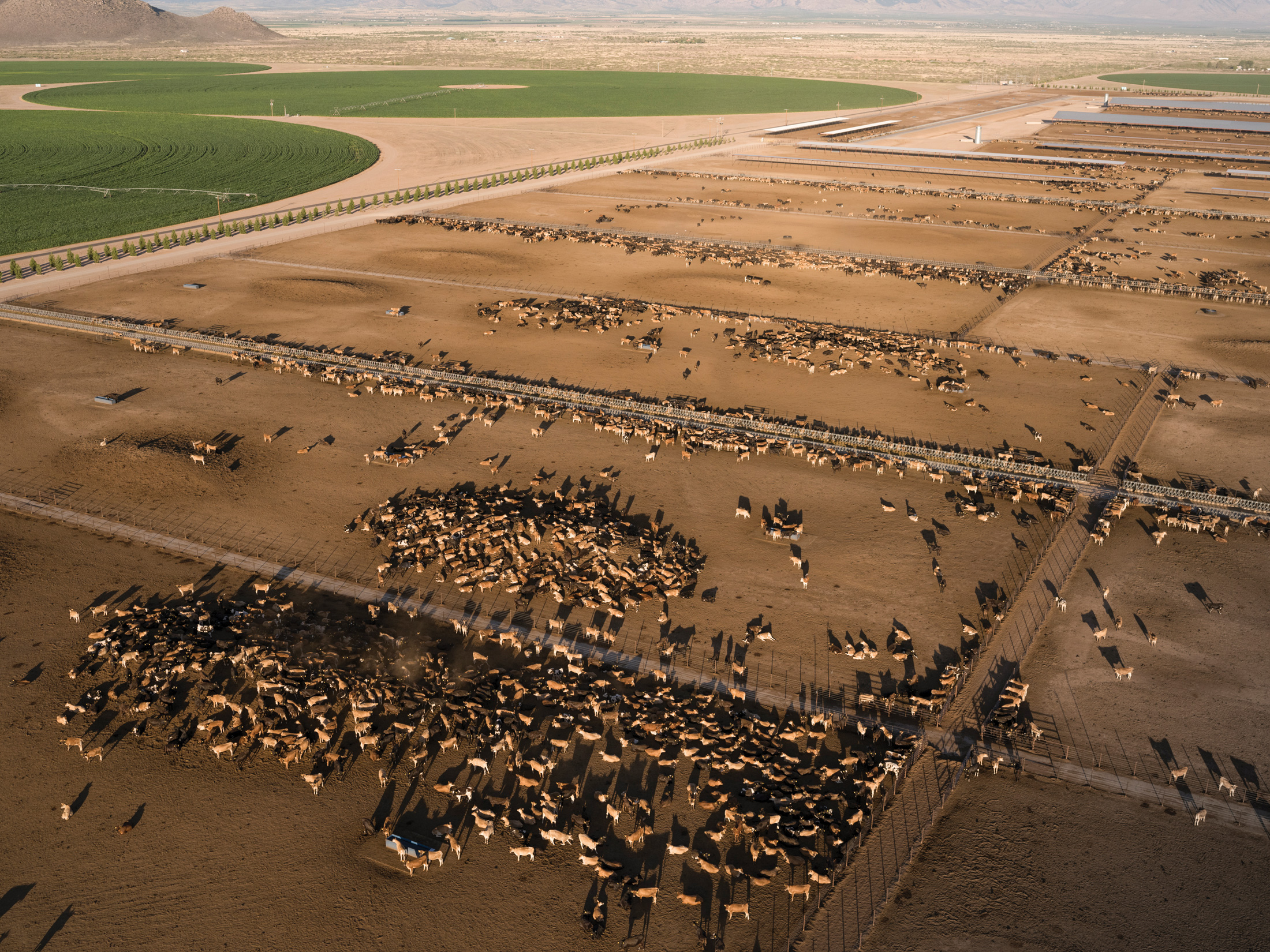
Plenty of people (including me) are vegan, healthy, and happy. As omnivores above the poverty line, we can all make conscious and conscientious choices about what we eat. Going vegan is one of the most effective ways to combat global warming (if you're not in a position to donate large sums of money toward climate change research or mitigation).
I would say it’s important to emphasize people don’t need to go complete vegan. Reducing consumption of animal products can be more realistic for most people.
It's somewhat revealing to me that whenever this comes up people feel personally attacked by people trying to make ethical choices using data. Why is it so threatening to you?
IMO we should share data and let people make their own choices.
I think they have these kinds of visceral responses because they’re experiencing cognitive dissonance regarding the ethical treatment of animals when the issue is raised by vegans.
Deep down they know that how we collectively treat animals is abhorrent and shameful and they see their role in it and it frustrates them that they won’t change their behaviour when they’re faced with the overwhelming proof that it is possible to do in the form of someone else doing so.
It’s a crab bucket mentality coming from a place of shame. I say this as an omnivore who isn’t in so much denial about my role in animal suffering and ecological destruction.
> As omnivores above the poverty line, we can all make conscious and conscientious choices about what we eat.
This being a forum of mostly tech workers, many of us can afford to choose more sustainable animal products and support agriculture that promotes biodiversity and carbon sequestration too. If you don't want to give animal products up, then look for sources that engage in regenerative agriculture practices. They tend to be the most humane ways to raise animals as well.
In the end, demand for meat, eggs, and dairy is never going to disappear. Maybe someday lab grown alternatives can be molecularly and structurally equivalent. But until then the most effective change we can make collectively is to change government incentives to farmers so they choose better practices.
I started out doing a "meatless Monday," and have now been vegetarian for 7 or 8 years. For someone who grew up in rural Iowa, always had a freezer full of steak and ground beef from the cows my father raised and butchered, and avoided most vegetables, it was a lot easier than I thought it would be.
Plowing pasture-land to grow soybeans is likely to reduce bio-diversity even more than running cattle on that land. A lot of pasture land is marginal land where a plow is very destructive, and is often a lot closer to the pre-human ecology where the land was grazed by large mammals.
Your primary point still stands -- eating tofu likely has a lower ecological impact than eating beef, but the trade-off isn't obvious, and second order effects can be significant.
If you stop grazing cattle on land, the owner of that land is going to find another use for the land to profit from it. Some of those uses are going to be better for bio-diversity, some are going to be worse. It's highly unlikely to become parkland.
So will going vegan reduce greenhouse gas emissions and increase bio-diversity? Probably, but not certainly. This uncertainty shouldn't dissuade people from acting on "probably" though.
Please provide the research that say that going vegan is one of the most effective ways to combat global warming.
According to a Swedish study publish a few years ago (https://iopscience.iop.org/article/10.1088/1748-9326/aa7541), going vegan is mid-tier in combating global warming. Who you buy your electric from has a larger impact on the environment than going Vegan, as does if/what car you own and naturally what kind of trips and vacations you do. A single trip with an airplane can have a bigger impact on global warming than all the meat they eat through their whole life.
Technically the lowest of the high impact actions. Combine one Moderate Impact Action with a part of a second Moderate Impact Action and you get more than a plant-based diet, or just do one of the better High Impact Action.
Sure, if you assume the low end of the range provided for a plant-based diet's impact. You'd need to combine every Moderate Impact Action to reach the high end of the range.
You asked for evidence that a plant-based diet is one of the most effective ways. You found it.
If you already don't own a car, don't travel by plane, and buy green energy, then a vegan diet is the next thing on the list.
The study gives everyone a 2.1T emission budget per year in order to achieve the 2 °C climate target. A single trip by plane can produce more than that, as can buying the wrong kind of energy. A EV car alone produce around 1T per year. A meat-based diet can coexist within that budget, same as the EV car. The average win for switching your utility purchase to a emission free source is 1.6T, while switching to a vegan diet is 0.8T. That illustrate the effectiveness between different kind of strategies to stay within that 2.1T emission budget.
This seems to say that an individual going vegan would save an entire transatlantic (!) flight for their footprint every single year, and recommends it as one of the four most effective things one can do?
I read the study wrong. A single transatlantic trip produce the same amount of emissions as eating meat for two full years. 1.6 tons for a flight vs 0.8 tons for a eating meat for a whole year.
Wynes & Nicholas downgraded electricity sourcing to "questionable merit." Table 1 gives a range of under 100 kg to 2,500 kg CO₂e saved per year, depending on the default CO2 intensity of the state/country you are living in.
A plant-based diet is one of their high-impact lifestyle choices.
This is bullshit. The vast majority of CO2 is created by energy production.
The problem is systemic and blaming other people for their lifestyle choices is neither effective nor helpful and just leads to further division. It's exactly this sort of division that helps fossil companies to destroy the planet and keep making money.
It's more than 6%. Cows eat a lot, so people cut forests to grow more feed (like in the Amazon). Deforestation contribute to global warming, not to mention the biodiversity damage.
Cows also eat lots of alfalfa and grasses which takes no artificial fertilizer or pesticides to grow. And produce a not insiginificant amount of premium quality fertilizer from it that is reducing artificial fertilizer production.
If we care about deforestation then we definitive should also not use ethanol as a replacement fuel, since ethanol uses the exact same farming and plants as the one used for feeds. Animal feed and bio fuel farming are usually combined. The other main source of bio fuel is from the lumber industry.
I am not vegan, will never be, but I have known vegans for more than two decades and they are doing fine. We need to make it easy to make the right choice about food, and one way to do that is to stop making meat meat meat the ONLY cool thing. I am fine with vegans serving me tasty food, they make alternatives easier. If you do not want to be a full time vegan just switch to 3 out 7 days of the week or something like that.
I gather this is a vague snarky comment loosely implying that vegans don't get enough B12. If so, it's a profoundly ignorant point that shows you don't have any knowledge of a typical vegan diet nowadays.
Yep, B12 is a solved issue. It's pretty cheap to supplement.
I do want to mention that you do also have to look out to get enough of : Omega 3, Calcium, Iodine, Iron, Selenium, Protein.
Takes a bit of work at the start to adapt but it's very doable, and it's not like Omnivores don't have comparable deficiencies from not eating enough plants and fruit. Not to mention other problems that come with eating animal products...
I only supplement with Omega 3, Vitamin D, B12, Iodine (although sometimes I go for wakame). Have been on a plant-based diet for around 4 years now, feeling healthy.
I know people who only eat chicken and beef, I'm pretty sure they need iodine way than you do. I don't have the issue, the main animal I eat (besides eggs and cheese) is fish, but I would bet you are healthier than a large part of omnivores.
Algae oil is the source of fish oil. Eat want you want, but don't be mad some fellows fetch their nutrients from the raw source instead of multi-staged passage within various other animals.
> [EPA and DHA] are originally synthesized by microalgae at the base of the marine food chain, not by the fish. As microalgae move up the food chain, fish acquire the omega-3s and accumulate them in their tissues [note from me: along nasty substances]
A lot of vegans eat fake meat and dairy which shares many of the environmental problems of meat, such as needing a lot of inputs so a lot of plant material relative to the final product.. It also adds energy use, transport, packaging etc.
There are also environmentally beneficial meats. So much so that when rewilding we sometimes need to add the same animals back (as is happening in Scotland - rewilders are breeding cattle that look like wild ones to make it "natural"). In the UK you can buy venison from wild animals that need to be culled to to preserve the environment.
Beyond Meat is one such product, and it generates a lot fewer greenhouse emissions.
> Based on a comparative assessment of the current Beyond Burger production system with the 2017 beef LCA by Thoma et al, the Beyond Burger generates 90% less greenhouse gas emissions, requires 46% less energy, has >99% less impact on water scarcity and 93% less impact on land use than a ¼ pound of U.S. beef.
Not to mention that beef/dairy production is a primary source of methane which is 80x more potent than Co2, but constantly under reported due to its shorter half life. Yes in the long run that matters, but its all the more reason that we should reduce animal agriculture right away as the payback is much faster than limiting Co2.
I never understood this argument. With Oil & Gas you release green house gases that have been sealed away back into the air.
For methane produced by farming all components remain in a cycle. Everything released by animals eventually finds its way back to plants, which get eaten, which become exhaust of animals, etc.
This sounds to me more like a spin by big oil to finger point at another industry.
The methane will eventually break down and be part of new plants, but in the meantime it will heat the planet much more than if it hadn't been there. Think of it this way: industrial scale cattle farming essentially makes and feeds biochemical reactors that turn hydrocarbons into a gaseous form that maximizes their global heating effect. Consider the counterfactual where we don't stuff billions of fart machines full of corn.
> The methane will eventually break down and be part of new plants
To be exact, excess methane go in the high troposphere, where it is broken down in CO2+H2O (the half life is very short, I don't remember which is which but it's either 5 or 20 years). So in any case, it accelerate climate change.
Nobody around me gives grains to their beef cattle until finishing just before slaughter to give them a bit of fat and marbling. Otherwise they are fed just alfalfa that is mixed with whatever natural grasses and clover and weeds grows along with it in the field. It is pretty much what they would eat naturally and is as close to free to grow as any crop can get. It is half the price of soybeans to buy on market, even less to grow it yourself than soybeans which requires a combine to harvest, and won't cause potential problems like feeding a cow a primarily soybean or grain diet would.
Now dairy farming? I would not be surprised if they feed mostly all grain and beans. Every part of dairy farming is about industrializing both the process and the cow with a lot of selective breeding for ridiculous amounts of milk production. Milking cows now produce over twice as much milk per cow than they did in the 60s and certainly require more nutrients to maintain than a natural cow's diet would sustain. Some cows are producing 10 gallons of milk per day now.
> For methane produced by farming all components remain in a cycle.
No, they don't. Methane is not absorbed by plants and is not part of any cycle. The only reason it is not a catastrophe is that it breaks down in a relatively short time. If we stopped producing methane in this way, no other process would replace it and the planet would cool down.
>Yes in the long run that matters, but its all the more reason that we should reduce animal agriculture right away as the payback is much faster than limiting Co2.
The long run is the thing that really matters.
A faster payback only serves to cover the impact of those that want to keep pumping up oil and gas in the meantime(also to make synthetic fertiliser) for a few decades.
It shifts focus from that on cow farts. As if the rotting plant matter and wild animal life that could replace it didn't emit any methane.
We don't have time anymore for A or B, we need to do both things now. End the fossil fuel industry and change our diets. If we don't radically decrease emissions by ~2030 we are ensuring +2C by ~2050. And +2C is going to be fugly.
We've already passed +1.5C, 2030 is in four years, less even.
Apparently mainly rice growing. I knew paddy fields were bad, but I didn't know they were that bad. Per calorie I am sure it is more like a tenth that of ruminants, perhaps less, but still worth replacing with other carbohydrates.
It is possible that that land shouldn't be used for anything. If we ate less animal products, there would be more than enough land to grow everything we need.
I didn’t say animal agriculture, I said “cow farts”. The animal agriculture figure listed on that Wikipedia page includes all ruminant livestock (mainly cattle, sheep, and goats).
Also, from that Wikipedia article:
There is accumulating research and data showing that oil and gas industry methane emissions – or from fossil fuel extraction, distribution and use – are much larger than thought.[35][36][37][38][39]
Still, my “astronomically dwarfs” looks to be overstating it by a wide margin.
> A cow that's fed on gras and farts emits nothing that that gras didn't pick up
Sorry to say, this is a very basic misunderstanding of chemistry. Methane is produced by the cow from carbohydrates in the grass. It is not present in grass, and the grass did not get it from the air. If we stopped producing methane in this way, no other process would replace it and the planet would cool down.
Always worth noting that the fertilizers don't require fossil fuels, just currently use them as they are cheaper if you ignore the externalities and alternatives haven't got the scale yet.
Pro-fossil fuel types will regularly claim fossil fuels are a hard requirement for fertilizer.
I have often read the Haber-Bosch process credited with making the population explosion and drastic decreases in hunger possible, making it one of the most impactful discoveries in human history.
What you've said is ambigious in the context of replying to my point.
Many people think Haber-Bosch requires fossil fuels as input. It doesn't.
Haber-Bosch requires hydrogen. Currently this is nearly always fossil fuel derived and the carbon parts that are not needed are dumped into the atmosphere.
Venting is not required, just cheap and neither is using hydrogen from a fossil source.
What is cheap and what is expensive in this context tho?
Presumably we don't want to be using blue hydrogen forever but if the alternative is sufficiently harder to get (if i remember well hydrogen isn't exactly winning the energy war tho it's better if you're not turning it backinto electricity. It's also many orders of magnitudes away from what we'd need for current haber bosh processes) then that still puts incredible strain on the food supply. It may be that it just can't compete with the nitrogen from...chicken shit and some better agricultural approaches..
Oh true and we consequently need to eat less cow meat, more different meat and/or have less people.
but focusing on that is shifting blame in an innefectual way of course. Pointing at cow farts puts the pressure on the individual and seeks to dampen effects in the short term.
Pump up less or no fossil fuels with actual long term thinking and those fertilisers will automatically become more expensive. At that point tho our oversized animal herd becomes harder to support and beef becomes automatically a lot more expensive whilst at the same time the manure becomes more important.
It isn't the "cow farts" that produce most methane, but rather the anaerobic processing of cow dung emanating from feed lots, dairy operations, etc.
Grass-fed beef cattle whose dung is "recycled" in a more natural way in the fields produce the same emissions as would wild ruminants such as antelope, bison, etc.
The biodiversity problem in the above refers mostly to new land clearances intended for farming, including for feedstock. This is minor in N. America and Europe, mostly as the clearances were done decades or over a century ago.
This Wikipedia article linked to elsewhere in this discussion gives the impression that the agricultural methane emissions are primarily a result of enteric fermentation by ruminant livestock.
That's the source of emission by the cow or steer. Industrial processing of the dung produces vastly more.
Table 3 in this source [0] shows enteric vs manure methane emissions are 158 vs 137 kg CH4/yr for dairy cows, who are mostly fed in feedlots, and 58 vs 2.4 for meat and other cattle, in the US and Canada. So the CH4 emissions range 65-fold from 2.4 to 158 depending on how the cattle are farmed.
Cows produce around 50 kg CH4 per head per year. There's around 1.5 billion cattle. That's around 75 teragrams (million metric tons).
Humans release about 410 teragrams altogether. About 40 percent is agricultural. And another 40 percent is from fossils, namely natural gas.
The top 100 natural gas leaks release over 20 teragrams of methane a year. That's just the leaks. That's 400,000,000 cattle worth of methane just pissed into the wind.
The figure comes from methane satellites and other methods (planes, drones, etc.)
Pulse.ghgsat.com as I recall. It's down these days(discontinued). It used to be free. They used to do reports on what they found. I think their stuff is all commercialized now. :\
Pulse was pretty cool. They had a global map where you could see various emissions going back years and years and years and you could watch it unfold over time.
I would argue animal emissions do not matter at all, methane survives about a decade in the atmosphere. Eventually breaking down to co2, co2 that was already in the atmosphere to begin with. Fossil fuel emissions are the ones that matter.
There were cows a decade ago as well. The herd size dictates a level in the atmosphere it does not constantly increase the amount of methane in the atmosphere, there is an equilibrium.
Increasing herd sizes increases that equilibrium level and that is partially responsible for the overall increase.
But there are mitigations that can be applied there are feed additives that reduce the cow related methane emissions to 1%.
Overall point is cow farts can be a drop in the bucket in the overall scheme of things, all we have to do is modify their diet slightly. Should we do it yes. Is it a huge issue no.
Industrial methane leaks are a bigger problem, that methane when it breaks down will turn into co2 that was not there to begin with contributing to global warming permanently.
Yeah, exactly. I didn’t say anything to dispute that so I’m not sure what your point is. The time it spends as methane before turning back into CO2 is really bad
We have around 27 million cattle (in the US) today. There were something like 30-50 million bison in the US before we almost eradicated them. Were the bison equally bad? Or is the problem that we’re feeding these ruminants unnatural diets?
Incidentally, I’d love to see the Great Plains return to huge roaming ruminant populations, and find a way to build our meat industry around that.
The ecology of it, including emissions, isn't really that bad if you're American. We're very efficient at beef production. It's really the global south that's most of the novel emissions, and that's mostly from counting land-use changes.
That is not how we keep cattle in the United States. In the US about 82% of grazing land is rangeland, which continues to support the natural ecosystems (prairies, shrublands, steppes, etc).
In places like Ireland, where cows have existed for 6000 years, they're also part of the ecology by any meaningful metric. There are a lot of more recently arrived species considered native! Mice, hedgehogs, rabbits, and red deer all came later.
That's a feedlot for finishing. Throughout its life, a cow will spend 70-80% of its life in pasture. Feedlots are only efficient for the finishing of the cow.
There's more nuance here than reducing consumption of beef and dairy. Moving over to regenerative farming practices instead of factory farming will also improve the situation.
Yes and doing regenerative practices all the way to the end would naturally force this reduction in consumption. It would be really good, because the land used to grow feed could be redirected to other more efficient uses.
I am pretty sure that stakeholder capitalism has an answer to this that might not be aligned with the ecology of Earth or what the meat consumers see as the right answer.
It isn't very much more for home grown grass beef, it is giant corporate margins and their bureaucracy overhead that necessitate industrial farming to compete out against these smaller farms.
Unfortunately, the priority is increasing efficiency and ROI, rather than sustainability. This leads to centralization and operations at a scale which are not sustainable, without external input or causing damage to existing nature. De-centralization and sustainable practices are the only way forward, as it has been for centuries before us on this earth. Maybe space is the place for these kinds of centralised and intensive practices, like being planned for data centers.
"Efficiency and ROI" can be applied to financial but also to environmental impact. Producing more with less [land use/fertilizer/water use] is also a form of efficiency, and it's good, but it requires vast capital that mom & pop farms don't have + strong government incentives. De-scaling is only an agrarian nostalgia fantasy, it's incompatible with reaching climate goals.
One of the biggest biodiversity-related threats - as in able to trigger cataclysmic-level event - is IMO commercial honey production.
Farm honeybees are essentially one breed, which is in itself a huge problem as a single pathogen/parasite can quickly wipe them out globally. On top of that, honey farmers move their hives all over the place, effectively displacing any wild pollinators present in vast areas.
Commercial honey is farmed in the most ecologically risky way.
Total insect mass dropped by 70% in Europe in 30 years, no insects = no pollination, no pollination = no flower = real mass scale extinction of pretty much everything that lives on earth since 80%+ of plants need pollinators.
It's related. Yes, there are other factors like insecticide use, habitat destruction, monoculture farming, etc. Bees are not the only factor, bet they are one of the factors.
In the "old days" beehives were stationary and found certain equilibrium with the rest of the ecosystems. Diminishing honey returns on additional hives placed practical limits on honey farm sizes.
However, these days commercial hives are literally transported all over the place following flowering plants, one hive serves serves a significantly larger area than in the past. The colonies can grow larger and denser, they outcompete other insects and starve them, suppressing numbers and diversity. On top of that they spread diseases while being treated, putting further strain on wild ecosystems.
That's a huge threat. If for whatever reason there was a mass colony collapse event or we simply stopped migratory beekeeping, huge areas would become under pollinated, collapsing food supplies over night.
Does this mean we should be advocating for more intensive cattle rearing? Stockyards and special breeds may not be the worst way to meet demand and reduce environmental impact (measured by CO2/methane emissions as well as biodiversity loss, for instance).
Managed grazing along with other regenerative techniques can sequester carbon in the soil. Factory farms have the problem of concentrated dung disposal which usually leads to letting it sit in methane producing conditions and also feed for intensive operations usually comes from non-regenerative crop farming which uses more fossil-fuel fertilizer and depletes the soil.
Stockyards are the worst offenders. This is due to how the dung is processed, which releases a lot of methane. Grass-fed cattle have much lower net emissions of greenhouse gasses.
Even on a site like HN, where rational and logical thinking is held in high esteem, and where few could be suspected of climate change denialism, a factual statement such as this one from the article:
"On average, animal-sourced foods are associated with eight times more carbon loss and 14 times more biodiversity loss per calorie than plant-sourced foods."
is very likely to be countered by listing personal preferences, anecdata, concern for vegans' health or mockery of that lifestyle choice, and generally nitpicking.
Honest admissions like 'I am part of the problem and will maybe try doing something about it' are very rare.
Indeed, that's the same answer when topics like public surveillance or dependency-inducing media are debated. It's difficult to criticize a problem, when you're a part of the problem, respectively paid to be the problem.
The key is "maybe try doing something", does not mean to destroy our culture. My child choose to be vegetarian but I just can not be bothered. I am too lazy. That does not mean I do not try to adapt. You can find the things that are wonderful with other ways of life.
I'm more triggered by how they count and compare plant and animal-based calories. They ignore one critical detail: human body is not a calorie meter. They don't take into account protein digestibility, phytic acid, phototoxins, non-digestible oligosaccharides that cause bloating. 200kcal of boiled eggs versus 200kcal of peas? Some people just really enjoy their peas and beans, I guess.
Is there nothing else going on in your life except to criticize other people's wanting to eat meat and milk, as humans have always done? That I'm sorry for.
I did not claim that eating meat and milk is one's entire point of living. I claimed that the entire point of living is to live according to human nature. Wanting to eat meat and a milk is a part of human nature for pretty much all of humanity's history.
You seem incapable of understanding rhetorical exaggeration.
I am not vegan, but I found dropping beef and lamb to be literally the easiest modification to my life possible. Dropping dairy is much harder, but as I am now discovering still incredibly easy to reduce.
you can, but you can also just reduce it, you can eat say half the meat/milk. Eat more vegetables and grains. Not only massively reduces the impact but pretty good for your body too
It's not *that* hard to prosper with even a vegan diet in the modern world, I know several who do fine.
Hardest part is knowing implicit animal ingredients you might not otherwise guess, which almost tripped me up when I visited the US and (as a vegetarian*) almost bought some yogurt before reading the ingredients list and finding to my surprise that it contained gelatine.
* it's mainly the cheese; I've substituted out other uses of milk. Also, vegan yogurt is a thing now, not sure when that happened, before or after that visit.
Supplements if you're vegan, there are vegetarian sources.
Just looked up the Wikipedia page to check on vegan, and… looks like all the animal and plant "sources" actually ingest the stuff from elsewhere?
Since only bacteria and some archea possess the genes and enzymes necessary to synthesize vitamin B12, plant and algae sources all obtain the vitamin secondarily from symbiosis with various species of bacteria,[5] or in the case of fermented plant foods, from bacterial fermentation.[86]
It literally is designed to survive without meat, meat used to be a luxury that was only eaten on special occasions for most people in history, we only eat so much nowadays because it became so cheap
The mean human has approximately one ovary, one testicle. A few hundred million Indians refusing all meat is compatible with the others not doing that.
With the ever growing popularity and success of the ketogenic diet, it becomes progressively more evident that a plant based diet is massively suboptimal for a not insignificant fraction of people.
This has nothing to do with plant and everything to do with rampant prevalence of gut dysbiosis and harmful gut bacteria feeding on otherwise healthy fibers and carbs, as well as processed carbohydrate and sugar overconsumption plus insulin resistance driven by sedentary lifestyles, inflammation, etc.
Ketogenic diet is a band aid to both, not a solution, and plants are not the cause of either problem, either.
Milk products are very prominent in many Indians’ diets. I wouldn’t be surprised if India’s milk consumption per capita is the highest in the world, given a large proportion of Indians avoid meat, so they might source more protein/fat from milk products.
If it’s not, it’s probably just poverty holding back consumption.
Edit: upon second reading, I realize techterrier was probably refuting only the steak part of sudo_cowsay’s comment
It's also poverty holding back millionaire consumption.
There was a research, which I can't be arsed to google with mobile, that compared western vegan diet and Indian omnivore and, yup you guessed it, the western version was less costly in terms of future proof.
But as with the zillionaires the human predicament depends on weather we muster the courage to limit ourselves or die to the extinction that's already manifesting itself in forms like forest fires, droughts and crop losses.
Sadly, this being Hacker News, it won't catch much attention and will be quickly flagged by people who have too much karma.
But I think we are making progress, slowly, sadly too slowly, with the current summer we are having in Europe, of the impact of our past actions in the weather. And make no mistake, eating so much meat and drinking so much milk, is a huge impact we are inflicting on our planet.
Please do not comment with "I do X" or "In our house, we avoid doing Y" - it is not about you and me, it is about society. I am convinced, you are convinced, we need everyone to be convinced.
Everyone apart from a few stragglers agree the climate is changing. Most people agree the world won’t change its behaviour on its own to stop that.
So we can thus incentivise change (things like renewables being far cheaper than fossil fuel) globally, and adapt to reality.
There are a vocal minority whining about how we need to stop eating beef or milk annd stop using energy and there are those who make beef and milk more sustainable and make generating energy sustainable. I have time for the latter. The former can go hand out with the coal rollers.
How do you make beef and milk more sustainable? I'm honestly wondering. To me it seems similar to saying: we can make coal power plants more efficient. Equivalent to more "efficient" (however you want to define that) forms of animal husbandry.
It doesn't change the fact that you're still burning coal, while you could be putting up solar.
Far too many so-called environmentalists are far more concerned with stopping life rather than practical methods to reduce and eliminate harm, and they get ignored - and worse fought back against.
“If you build a solar farm generating 100MWh rather than an ethanol farm generating 50MWh that’s bad because the it’s a supper slope to banning beefburgers”
You are not stopping people from taking in calories.
In your analogy it would be the same as saying: you are not allowed to heat your home with a coal burner. Same as saying you are not allowed to eat beef. You can still eat lots of other stuff, just not beef.
The goal isn’t to eat beef, it’s calorie intake.
Now I am not saying that we should ban cattle farming or beef and dairy consumption. In the end I see this as a problem of our current system not being able to effectively reflect environmental impact in price.
Cattle farming has an environmental cost which is higher than other alternatives (chicken, soy etc.). This environmental cost is not directly passed on to the consumer.
All of the alternatives you listed will not succeed in our current system because the environmental savings they might have can not be passed on to the customer. On the contrary: usually lower environmental impact has a monetary cost associated, making prices higher for products from these initiatives.
It is not just a few stragglers, 30% of americans believe climate change isnt real, the us president is one of them.
Fighting climate change is not going to be successful without sacrifice, we tried that for the last decades and fossil fuel consumption has only risen.
Of course people dont want to do that and so instead deny it happening or that it will be magically fixed in the future.
Okay lets get this straight, animals do not contribute to global warming. The co2 they emit has been taken from the atmosphere from plants.
Methane breaks down to Co2 in the atmosphere on average in 9.6 years.
Animal rearing does not permanently affect the climate.
Increasing stock sizes does increase the methane level equilibrium but there are mitigations to this, there are additives to feed that can reduce methane emissions to 1%. Last I checked a few years ago, there were pilot programs to determine effects on animal welfare and product quality.
The problem we should be focusing on is fossil fuels.
> Methane breaks down to Co2 in the atmosphere on average in 9.6 years.
Despite which, over a 100 year period it has 25 times the warming impact as the CO2 it turns into.
> The problem we should be focusing on is fossil fuels.
Everyone should focus on whatever they know how to make a dent with, the "sustainable" emissions rate is 0.1% of the current rate which is essentially "we need to fix everything everywhere except for pick one of grassland or North Korea".
Animal-emitted CO2 isn't the problem, but methane.
The CO2 captured by plants and eaten by livestock gets converted in part to methane, a more more potent greenhouse gas. This does eventually degrade back to the original CO2, but on a scale of decades, it's currently too slow to prevent accumulation of methane.
It's probably not the tone. You only choose to hear that tone and close up. (From my experience)
I hold some fringe ideas, e.g. helmets are bad. So I have lots of experience with handling discussion where people close up for any rational argument. Because I am just wrong by definition. That really lets you explore how people react to ideas they do not support.
My point is that some issues, especially meat, makes people blame tone really fast. This is my view after experimenting with it for many years. I obviously care about your view otherwise I would not have commented, you see an attack/denial where there is not ment to be one.
I would much rather have Europe install ACs instead. Stopping meat, not installing ACs, degrowth all look like masochistic ways to show that we are repenting.
ACs are not going to stop storms, floods, droughts and the rising sea level. Fighting climate change requires sacrifice of current comforts for an easier life of future generations.
So of course we are not going to do anything about it, when it is much easier to deny it exists or pretend that it is going to magically fix itself in the future.
The miracle would be to read the article which states the biodiversity damage is 14 times higher per calorie than plant-sourced foods. Which means you could reduce the 40% to 2-3% if you would replace it totally.
We need a new caveat cliche for these headlines like how people love to reply “in mice” to health research. For environmental research it’s almost always “in the 3rd world”